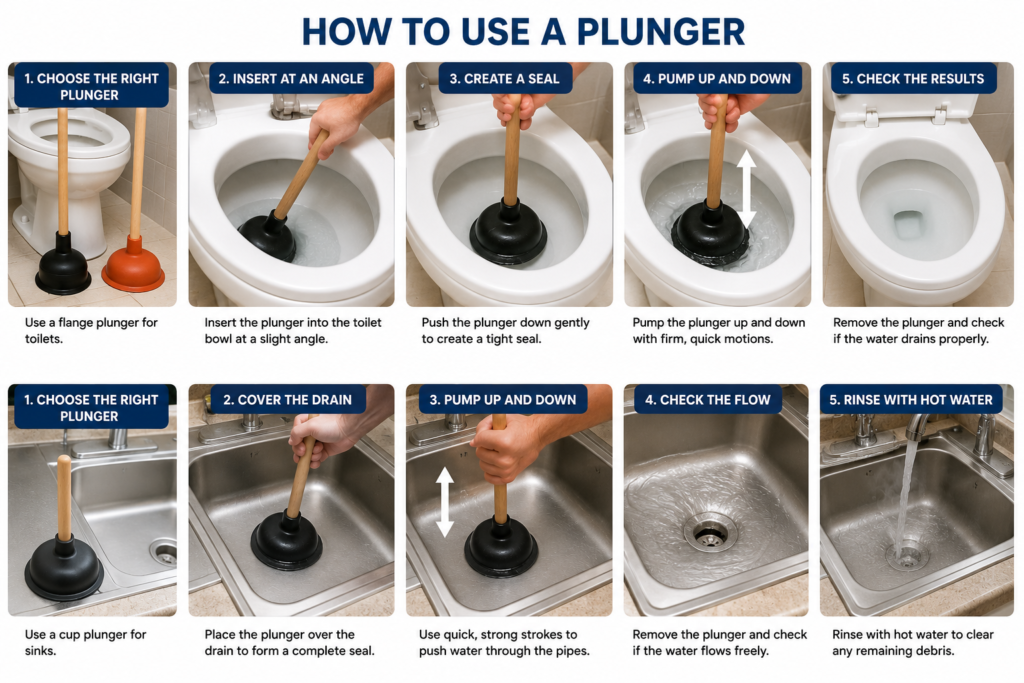
Learning HOW TO USE A PLUNGER | Plumbing Basics starts with choosing the right tool for the job. Many homeowners struggle to clear a clogged drain simply because they’re using the wrong type of plunger or an ineffective plunging technique. Selecting the proper plunger and applying the correct method can quickly restore normal water flow without the need for professional repairs.
Choosing the Right Plunger
Standard Cup Plungers
Standard cup plungers are designed for flat surfaces and work best on lavatory sinks, bathroom sinks, and kitchen sinks. This type of plunger creates a tight seal over flat drains, making it effective for clearing minor sink clogs.
Flange (Toilet) Plungers
Flange plungers, also known as toilet plungers, feature an extended rubber flange that fits securely inside a toilet bowl drain. This design creates a stronger seal, allowing greater pressure to remove toilet blockages more efficiently.
HOW TO USE A PLUNGER Properly
For Sinks
Place the plunger directly over the drain, ensuring a complete seal. Use quick, steady, repetitive plunging motions to force air and water through the P-trap, helping break apart the clog.
For double kitchen sinks, seal the unused drain with a stopper or damp cloth. This directs maximum pressure toward the blockage instead of allowing air to escape through the second drain.
For Toilets
Insert the flange plunger into the toilet bowl at a slight angle so the cup fills with water. Once positioned, press the plunger firmly to create a watertight seal. Pump the handle with controlled force until the obstruction clears and the water begins flowing normally.
Troubleshooting Stubborn Clogs
If plunging fails after several attempts, the blockage may be deeper within the drain line. At this point, using a closet auger is often the next best solution, as it can reach obstructions that a plunger cannot remove.
Professional Plumbing Tips
- If you only have a standard cup plunger, fold the bottom lip inward to create a tighter seal when unclogging a sink.
- Always finish by flushing the drain with hot water or flushing the toilet with toilet paper to confirm the clog has been completely removed.
- Keep separate plungers for sinks and toilets to maintain proper hygiene.
- Store plungers in a dry, well-ventilated area to extend their lifespan and prevent bacterial growth.
Mastering HOW TO USE A PLUNGER | Plumbing Basics can save time, reduce frustration, and help resolve many common household plumbing problems before they require professional assistance.